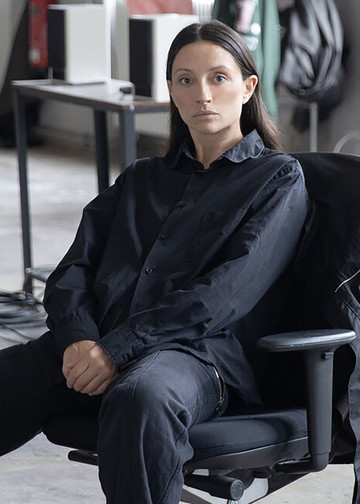
Lucy Beech is a British artist based in Berlin working across moving image, spatial sound and installation. Informed by cinematic and scientific methods, Beech’s collaborative practice examines the entanglements of bodies, technologies and materials, exploring hidden infrastructures, material flows and ecological relations. Developed through collaborations with scientists, historians, poets and ecologists, Beech’s films collapse disciplinary boundaries producing new experimental narrative structures.
Beech was an artist fellow at Max Planck Institute for the History of Science, Berlin 2020-2022 and the founder of the Working With Waste Research Group. Forthcoming and recent presentations of Beech’s work include: 18th Lyon Biennale of Contemporary Art, MAC Lyon, New Humans Memories of the Future, New Museum, New York (2026); A Map of the Pit, Tate Modern, London (With James Richards); Hymnal ICA London, with Alif Hilal (2025); Out of Body, Between Bridges, Berlin; Warm Decembers, CAPC Musée d’Art Contemporain de Bordeaux; Vertigo Video Scenarios of Rapid Change, Fondazione MAST, Bologna (2024); Reproductive Agents, Museo Madre, Naples; Ooze, Kunstinstituut Melly, Rotterdam (2023); Reproductive Exile, Tramway, Glasgow; and The Centre Cannot Hold, Fondation Galeries Lafayette, Paris (2018). Beech has collaborated on performance projects with Edward Thomasson since 2007. Together they have exhibited in theatre and exhibition spaces including Tate Britain, London (2017); Camden Arts centre; and Barbican Theatre, London (2011). Beech has an upcoming solo exhibition at Champ Lacombe, Biarritz in November.
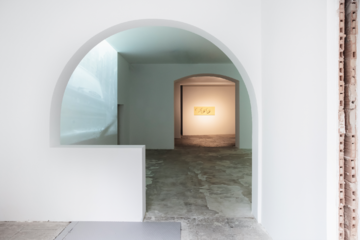
This new series of work spanning video, photography and sculpture builds on Beech’s interest in ecological interdependence, waste circulations and the cultural imaginaries that accompany them. Beech follows related processes of filtering, erosion, decomposition and renewal, approaching bodies as temporal arrangements constituted by what passes through and between them.
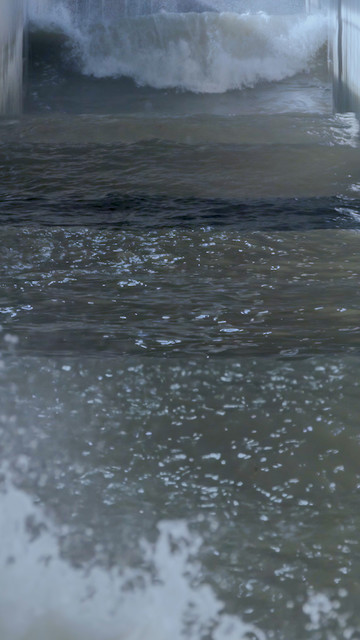
“Storm”, 2026
4K vertical video with stereo sound (7.1 also available)
with music By Ville Haimala
Video work “Storm” documents a five-hour artificial storm simulation originally designed to counter the impact of rising sea levels and increased storm activity on shoreline infrastructure. Modelled on a worst-case North Sea storm, the simulation unfolds inside a concrete wave channel in which a choreography of waves erodes a sand dune that is designed to temporarily reproduce the stabilising function of beach-grass root systems. As the storm unfolds it creates an unsparing topography of human creation and its own destruction. The work is scored by Beech’s collaborator Ville Haimala and continues Beech’s interest in the relationship between observation and staging in environmental work.
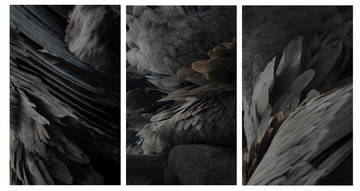
Three large-scale photographs depict the imbrication of vulture wings during a choreographed feeding at a rewilding site in the Baronnies, a mountain range in the Dauphiné Alps of France. These works were produced in the context of Beech’s new project for the Lyon Biennale, which explores the lifecycle of scavenging birds.
“Feathers” prints isolate the wing as a material technology through which the organism negotiates the atmosphere. Composed largely of dead keratin, vulture feathers are non-living structures continually maintained and replaced. The images depict layered wear, pigmentation and structural variation of the vulture’s feathers. The colour of the birds darkened tips, strengthened by melanin, are a material record, registering successive temporalities of renewal. Vulture research is a recurring subject in Beech’s work as a context through which changing scientific understandings of the vitality of life can be traced, from Renaissance alchemical thought to contemporary microbiome research, humans have turned to the vulture as an epistemic index of shifting relationships between matter and transformation.