
zaza’ presents a solo exhibition of Rosa Panaro (Casal di Principe, 1935–Naples, 2022) at Paris Internationale.
Rosa Panaro’s sculpture takes shape through encounters between materials and images drawn from different contexts. Concrete, shells, paper, fabrics and resins enter constructions in which the figure retains something of its components’ heterogeneity. Surfaces thicken, colour exceeds description, and bodies assume incongruous proportions. Through these operations, Panaro develops a language in which the material culture of Naples becomes a site of experimentation: devotion, nourishment and myth intersect with desire, violence and the contradictions of social life.
Already in the early 1960s, her use of concrete unsettles the compactness of the sculptural mass. Stones and shells participate in the construction of bodies, introducing fragments of the natural world into the material. Form emerges from the coexistence of substances and textures. In her assemblages, wood, iron, plastic, fabrics, feathers and hair compose uneasy organisms in which domestic elements and salvaged materials acquire an unfamiliar presence. The figure’s identity is constructed through grafting, accumulation and friction.
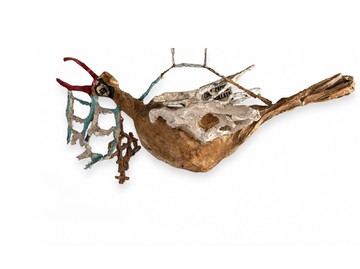
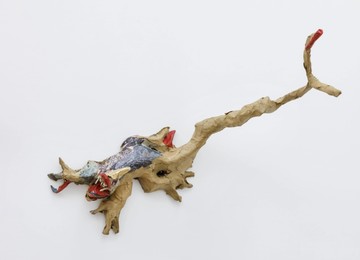
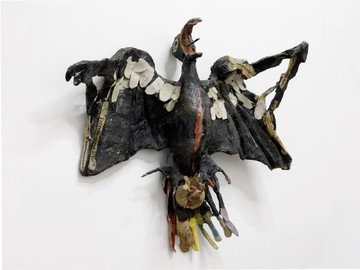
Papier-mâché expands the possibilities of this procedure. Panaro looks to the drapery of late Baroque statuary in Neapolitan churches, to the capacity of a lightweight material to produce volume, movement and theatrical presence. The fold makes the body visible through what envelops it; colour intensifies its appearance. These qualities recur in her sculptures, whose modelled, layered surfaces acquire a substance at once bodily and artificial. Pulping, adding, applying and painting become stages of a construction the artist can carry out herself. Control over the process has a specific significance within her pursuit of autonomy.
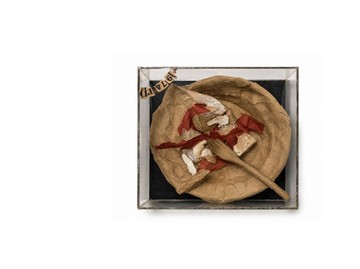
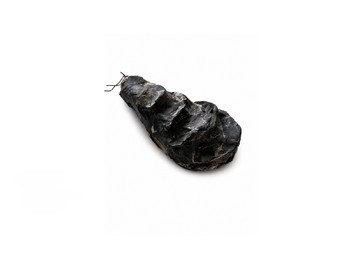
In the 1970s, food and animals condense collective tensions. During the cholera outbreak of 1973, mussels become objects of suspicion in Naples: something associated with the table and with pleasure suddenly carries a threat. Panaro enlarges them and returns them to the city as grotesque presences, staging the instability between appetite and repulsion, familiarity and danger. Elsewhere, meals and leftovers preserved under glass acquire the ambiguous status of specimens and devotional objects. Sculpture holds onto what should be consumed, turning an everyday gesture into a suspended scene.
Her public actions of the same period extend this investigation into relations between objects. Exchanging a papier-mâché tomato for real tomatoes at the Mergellina market introduces sculpture into a negotiation over value and use. These historical interventions make legible a dimension that also runs through the works: materials and images carry habits, hierarchies and possibilities of exchange.
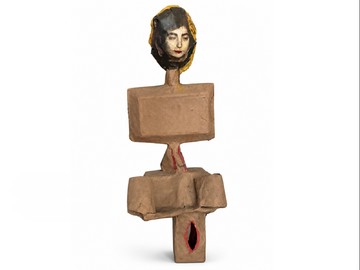
From 1977, her involvement in Gruppo XX and Donne/Immagine/Creatività deepens the relationship between autonomy in production and the construction of female identity. In her subsequent engagement with myth, the body is assembled through wings, masks and shifting attributes. Lilith and Parthenope become figures through which inherited representations can be reworked and questions of sexuality, autonomy and social power explored. Their instability corresponds to that of a material that can continually be added to, recombined and transformed.
The force of Panaro’s work lies in this capacity to hold construction and irreverence together. Her sculptures make tangible the process through which a form, a body or a symbol acquires authority, and through which it can be altered.
Selected exhibitions include Doing Deculturalization, Museion, Bolzano (2019); Facile ironia, MAMbo, Bologna (2025); Gli anni. Capitolo 2, Madre, Naples (2025–2026); and Tragicomica, MAXXI, Rome (2026). Recent solo exhibitions include Reliquiarium, SANDY BROWN, Berlin (2020), and her exhibition at Galleria Tiziana Di Caro, Naples (2026).
Rosa Panaro, Hermana Scinnee cu me, 2006
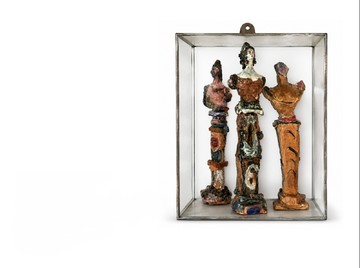
Senza titolo (dalla serie delle Erme)
1989-2000
Glazed ceramic
34 × 7.5 × 6.5 cm
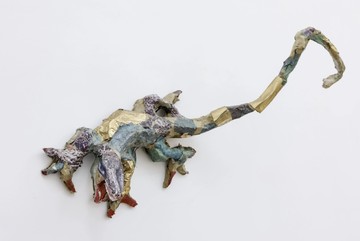
Senza titolo (dalla serie Salamandre)
2013
Papier-mâché, collage
38 × 32 × 15 cm
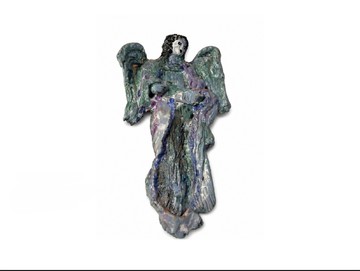
Pax (Angelo azzurro)
1999-2010
Glazed ceramics
32 × 18.5 × 3 cm
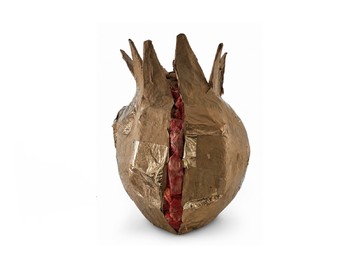
Dalla serie Pizze
1974
Papier-mâché, plexiglass
23.5 × 23.5 × 8 cm
Hermana Scinnee cu me
2006
Papier-mâché sculpture
188 × 37 × 39 cm
Ciconia Mutadis
1997
Papier-mâché
50 × 147 × 80 cm
Senza titolo (dalla serie Salamandre)
2000s
Papier-mâché, collage
43 × 13.5 × 16.5 cm
Cozza nera
1973
Papier-mâché
21 × 12 × 6 cm
Cormocatrame
2003
Papier-mâché, collage
160 × 175 × 25 cm